Receiving Liquor at a Bar: A Transport Pass Checklist for Maharashtra
· 3 min read
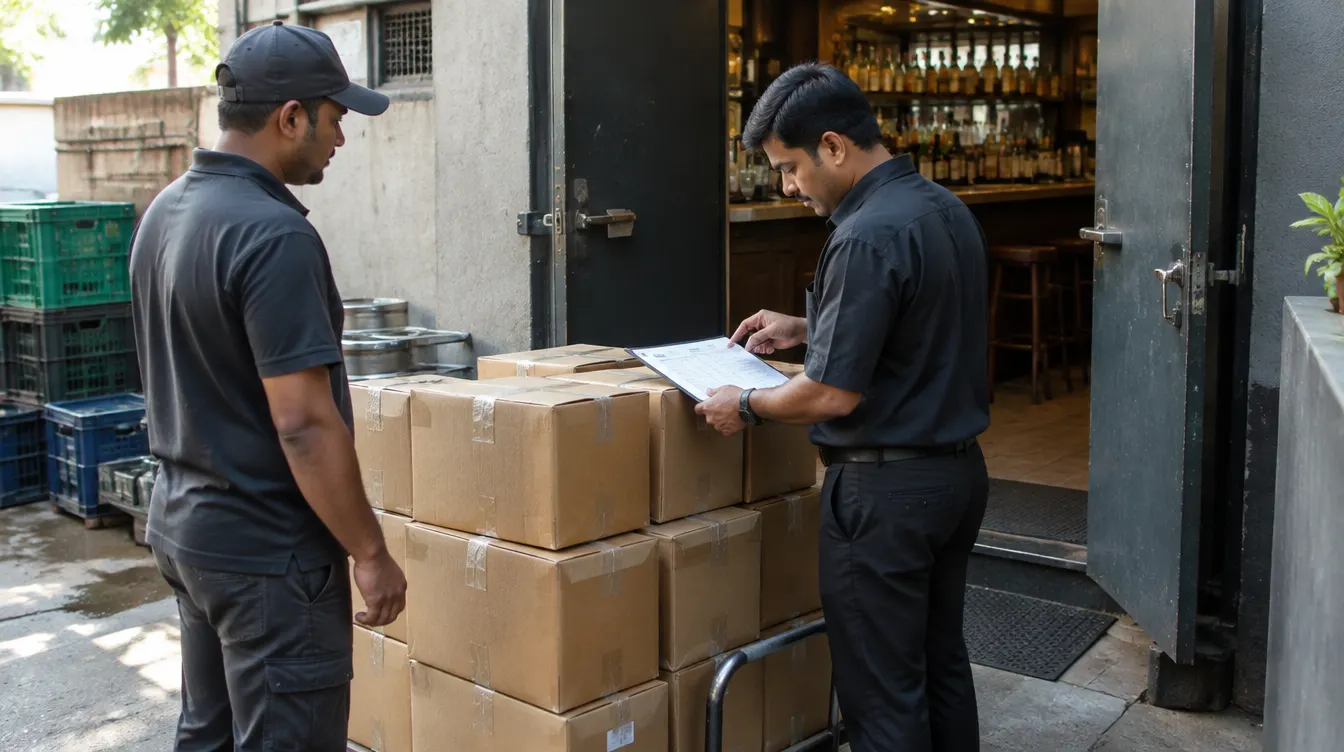
Most excise register problems start at the back door. A case is unloaded, the pass goes into a drawer, and three days later someone enters it from memory. By month end the receipt is on the wrong date, a brand is under the wrong name, and FLR-3A no longer matches the shelf.
Receiving takes five minutes when it is done properly at the door. This checklist covers what to check and what to record. For how receipts feed FLR-3A and FLR-4, see our guide to bar excise registers in Maharashtra.
At the door, before the driver leaves
- Match the pass to your licence. The consignee on the transport pass should be your licence and your premises.
- Check the validity. Note the pass date and the validity window printed on it.
- Count cases against the pass, brand by brand and pack size by pack size. A 750 ml and a 1 litre of the same brand are different lines.
- Open and check any damaged case. Count broken or leaking bottles.
- Write any shortage or breakage on the delivery copy, with brand, size and count, and have the driver sign it.
- Photograph the pass, the delivery copy and any breakage.
Recording the receipt
- Date it to the pass. The register follows the pass date, not the day you sit down to enter it. This one habit removes most of the drift between FLR-3A and stock.
- Record the TP number against the receipt. FLR-3A lists receipts with their pass numbers, and an inspector reads them.
- Use your Excise Master names. The pass might say "Grey Goose Vodka Original Vodka"; your register should say the brand and size exactly as your licensed Excise Master does, with one item code.
- Enter what you received, not what the pass promised, if there was a shortage or breakage, and keep the evidence with the pass.
- Separate closed and open stock. Received stock is sealed bottles. It joins the closed-bottle count until a bottle is opened for pegs.
Filing
- File the original pass by date, in the month it belongs to.
- Keep the photo with the receipt entry, so the register and its evidence sit together.
- Tell your consultant about any shortage, breakage or pass problem the same week, not at month end.
Common mistakes
- Entering passes in a batch at month end, on the entry date.
- Treating the same brand in two sizes as one line.
- Adding a brand under the supplier's spelling, creating a duplicate item.
- Recording the full pass quantity when bottles arrived broken.
- Losing the pass, so the TP number on the register has nothing behind it.
Make it a photo, not a task
With Novota BEC, the person at the door photographs the pass, or forwards it from WhatsApp. BEC reads the pass number, date, validity, licences and every brand line, matches each brand to your Excise Master, and dates the receipt to the pass date automatically. FLR-3A and FLR-4 are built from the same stock, so the register is right before the month closes.
Frequently asked questions
What is a transport pass for liquor?
The pass that moves duty-paid foreign liquor from the supplier to your licensed premises. It carries a pass number, date, validity, the consignee and supplier licences, and every brand with its pack size and quantity.
Which date should a receipt be recorded on?
The pass date. Excise registers follow the date on the transport pass, so a pass dated the 22nd belongs on the 22nd even if it is entered on the 25th.
What if cases arrive short or bottles are broken?
Note it on the delivery copy before the driver leaves, with the brand, pack size and count, and take photos. Record only what you actually received and keep the evidence with the pass, then settle the difference with the supplier and your consultant.
Do I need to keep the transport passes?
Yes. The FLR-3A lists receipts against their TP numbers, and an inspector can ask to see any pass behind a receipt. Keep the originals filed by date and a photo of each.